
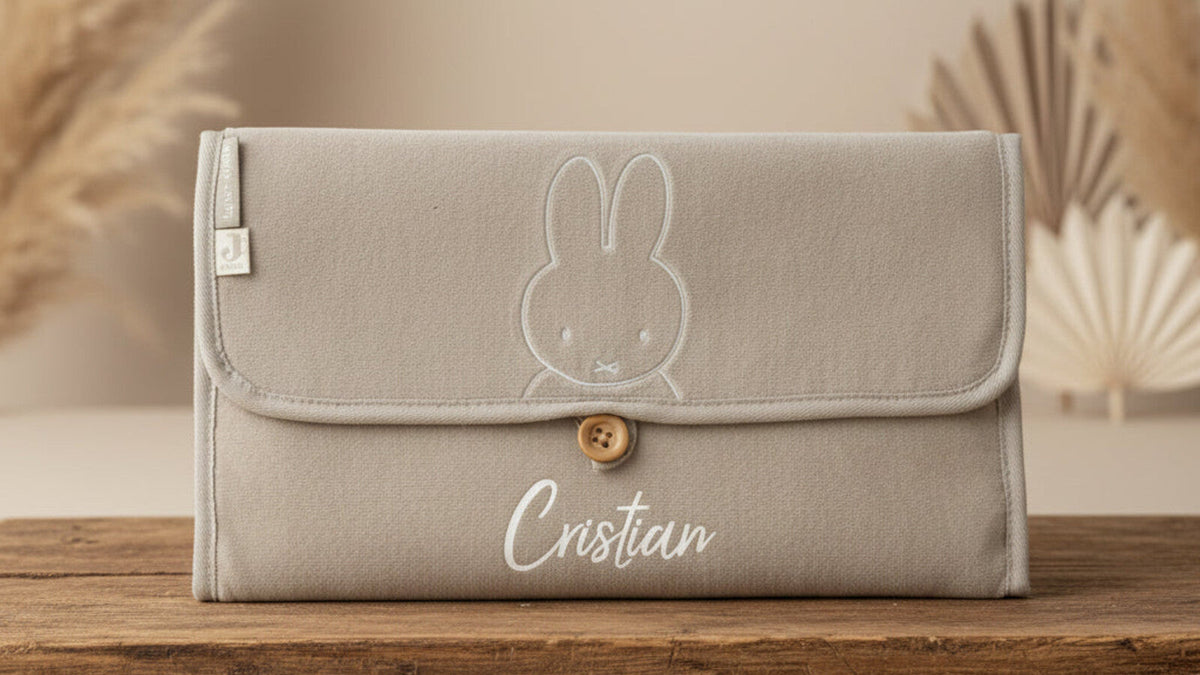
Twill Sand changing mat
Integrated pockets keep a diaper and small essentials close; available with a plot-applied name or without personalisation.
View product
Short answer: A baby may cry during a diaper change because of hunger, tiredness, cold, a wet diaper, the transition from being held to lying down, or too much stimulation. Prepare everything, explain your movements calmly, keep the process brief and pause if your baby becomes very upset. New, unusually painful crying or other signs of illness should be assessed promptly by a professional.
Changing means undressing, lifting and touching a baby and briefly interrupting what was happening before. Some babies enjoy it, others protest. Crying is first of all a signal that your baby needs comfort, a change or a pause; it does not mean that you are doing something wrong.
| What you notice | Possible trigger | A practical next step |
|---|---|---|
| Crying starts as soon as baby is laid down | Transition, loss of closeness or startle | Place a hand on the chest or tummy, speak, then begin slowly |
| Baby roots, smacks lips or turns the head | Hunger | If the diaper allows it, feed or calm baby first |
| Yawning, looking away or frantic movements | Tiredness or overstimulation | Reduce light and noise; do only what is necessary |
| Crying begins when clothes come off | Cold or unfamiliar touch | Warm your hands, keep the upper body covered, work gently and efficiently |
| Crying occurs with one particular movement | Discomfort or possible pain | Stop, observe and ask a midwife or pediatrician if it repeats |
Common explanations are ordinary: hunger, tiredness, temperature, a need for contact or too many impressions. Interrupting a calm feeding or cuddle can also cause protest, especially in newborns who cannot anticipate transitions.
Older babies may want to roll, crawl or explore and dislike staying still. A short, clear routine on a safe surface often works better than adding more entertainment.
The German public-health portal kindergesundheit-info.de describes crying as an important infant signal. Gesund ins Leben recommends calmly explaining everyday actions and responding with eye contact, speech and closeness.
Important: A mobile, rattle or song may help, but not every baby finds distraction soothing. If your baby becomes more unsettled, less stimulation is the better choice. The goal is not to prevent every tear, but to guide your baby through the situation safely and responsively.
Newborns may be sensitive to position changes, cold and quick touch. Warm your hands, keep the upper body covered when possible and avoid jerky leg movements. Eye contact and your voice provide orientation.
For a very mobile baby, changing on the floor can be safer and calmer. Put everything beside you first, offer at most one safe object and keep the routine short. Stay with your baby even on the floor.
For the basic technique, see our step-by-step diaper-changing guide. This article focuses specifically on distress and crying during the change.
Contact your midwife or pediatric practice if crying suddenly sounds different or shrill at nearly every change, a specific movement clearly hurts, your baby seems unusually lethargic or other symptoms appear. Breathing difficulty, blue skin, seizures or poor responsiveness require immediate medical help.
Your own strain matters too. If the crying overwhelms you or you fear losing control, get relief immediately. Guidance from the NHS also stresses: never shake a baby; place the baby safely down and organise support.
No product automatically stops crying. Useful items simply keep the process organised and brief: a mat that opens quickly and soft washcloths within reach. The following items are active, publicly accessible and currently available in at least one variant.
Explore diaper changing & care
When your baby cries during changing, complicated tricks are rarely the answer. Look at hunger, tiredness, temperature, transitions and stimulation. Prepare the area, speak calmly, work gently and briefly, and allow pauses. Repeated painful or unusual crying needs professional assessment.
Cold, a position change, touch, hunger or a brief loss of body contact may be involved. Warm your hands and room, keep the upper body covered and announce your movements calmly.
It depends. With strong hunger, calming or feeding first may help if the diaper is not urgent. If your baby spits up easily after feeds, changing beforehand may be more comfortable.
A song or one safe object helps some babies. Extra stimulation can worsen tiredness or overload. Watch whether your baby becomes calmer or more unsettled.
For very mobile babies, the floor can be safer because there is no fall from a raised surface. Prepare everything and remain with your baby.
Stop the movement and gently roll the pelvis to the side instead of pulling firmly on the feet. Ask a midwife or pediatrician if the same movement repeatedly causes crying.
Seek advice for suddenly unusual, shrill or persistent crying, obvious pain, fever, breathing problems, marked sleepiness or poor responsiveness; urgent warning signs require immediate help.
Sources: kindergesundheit-info.de, “Das Schreien des Babys” and “Das Baby richtig wickeln”; Gesund ins Leben, “Wie im Alltag die Eltern-Kind-Bindung entsteht”; NHS, “Soothing a crying baby”. Accessed 30 October 2026. This guide does not replace individual medical advice.


