












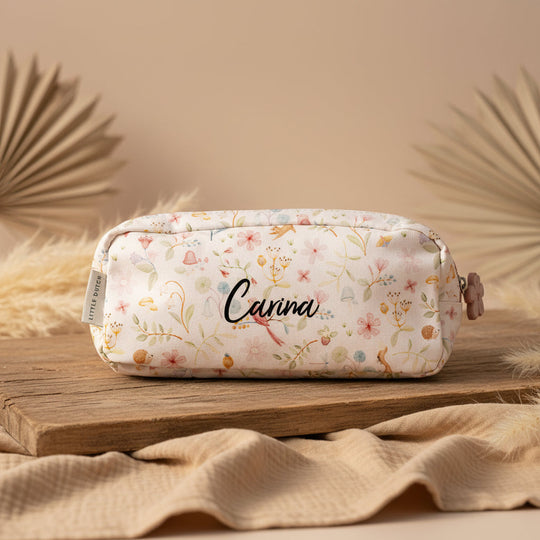














Diaper Bag Shopper Twill Sand
Spacious bag with compartments for the journey home and later trips with the baby; with or without personalisation.
View diaper bag

How can I tell if labour has started? Most likely by contractions that become stronger, longer and more regular over time. A mucus plug, the baby moving back, or your waters breaking can also signal the start of labour. However, a single sign does not prove that active labour has begun. What matters is how things progress, your personal birth plan and the assessment of your midwife or the maternity ward.
| Observation | What it could mean | Next sensible step |
|---|---|---|
| Contractions are becoming longer, stronger and closer together | Labour may be starting. Only an examination can show for sure whether your cervix is changing. | Monitor the timing and progression; if you are unsure or according to your agreed plan, call the maternity ward. |
| Irregular pulling that subsides when you rest | This may be consistent with practice or false labour. Transitions are not always clear-cut. | Rest, drink and try changing positions; continue to monitor for changes. |
| Slimy, possibly slightly pink discharge | The mucus plug may have come loose. Labour may start soon, but it does not have to. | Stay calm. If bleeding is heavier, seek professional advice immediately. |
| Sudden gush or continuous trickle | Your waters may have broken, even without contractions. | Note the time, colour and smell, use a pad and contact the maternity ward. |
| Back pain, downward pressure, urge to urinate | This may be part of the start of labour, but on its own it is not clear-cut. | Assess together with other signs; call if you are concerned. |
Practice contractions can be clearly noticeable and still subside. Typical labour contractions, by contrast, tend to progress: they often become more intense, last longer and come more regularly over time. Rest, warmth or changing positions do not reliably stop them. Nevertheless, there is no home test that can confirm the start of labour with one hundred per cent certainty.
Some labours start slowly, others more noticeably. The progression may also feel different during your second or third child. This is why a rigid minute rule is less helpful than the individual plan you have discussed with your midwife, practice or maternity hospital.
Notes or a simple timer can help during the phone call. They do not replace a professional assessment and should not lead you to stay at home longer despite warning signs.
The mucus plug seals the cervix during pregnancy. When it comes loose, thick, yellowish or pinkish mucus may become visible. This so-called "bloody show" can occur shortly before birth, but also days beforehand. Some pregnant women do not notice it at all.
A little blood in the mucus can occur. Fresh or heavier bleeding is different and should be discussed immediately with the maternity ward or a doctor. The British health authority NHS refers to the mucus plug as a possible early sign, but also emphasises that labour may start quickly afterwards or still be a while away.
Amniotic fluid can gush out or only trickle slowly. It cannot always be reliably distinguished from urine at home. Use a pad, not a tampon, and note the time, colour and smell as much as possible. Contact the maternity ward even if there are no contractions yet. The maternity hospital will determine the next steps based on the week of pregnancy, findings and your individual situation.
Medical information from maternity hospitals indicates that a broken water should be assessed by a doctor before contractions begin. It is particularly important to make contact quickly if the fluid appears greenish or brown, smells unpleasant, bleeding occurs, you feel feverish or unwell, or your baby moves significantly less.
The right time to leave is individual. It depends not only on the interval between contractions, but also on whether it is your first birth, how far the journey is, whether there are special medical factors and what has been agreed with the hospital. Call before leaving if possible. The team can assess the situation based on the information you provide and tell you whether you should come.
In an acute emergency, call 112. If the situation simply does not feel right to you, that is also a good reason not to wait alone any longer.
You do not need to "endure" contractions until a certain app number is reached. You also do not need to be sure whether they are real labour contractions before you call. And you do not need to speed up the start of labour with home remedies. If your maternity facility has given you personal advice, this takes precedence over general guide tips.
If you would like to organise your wishes, a short birth plan as a basis for discussion can help. It is not a script, but a flexible guide for you and the team.
These items are not medical requirements for birth. They can simply help you pack your documents and initial baby essentials for the journey clearly. All four products were active and available in at least one version during our review.
Spacious bag with compartments for the journey home and later trips with the baby; with or without personalisation.
View diaper bag
Compact solution for nappies and small changing essentials on the journey home or on the go.
View changing mat
Keeps your maternity record book protected on the go and can later be reused for baby documents.
View document cover
Versatile as a burp cloth or mat during feeding; do not place loosely in the baby cot as a sleeping mat.
View muslin swaddleDiscover On the Go & Organisation
Not necessarily from the first minute. At the beginning, intervals may vary. What matters is whether the contractions become stronger, longer and closer together over time. If you are unsure, call the maternity ward or your midwife.
Yes. Often contractions start first; the amniotic sac may break later during labour. Your waters breaking is therefore not a necessary first sign.
Usually not for that reason alone. The mucus plug can come loose hours or days before birth. Monitor for other signs. If bleeding is heavier or you are concerned, contact immediately.
Amniotic fluid can gush out or trickle steadily and cannot always be reliably distinguished from urine at home. Use a pad, note the colour and smell, and call the maternity ward.
Regular contractions, fluid loss, or other possible signs of labour before the 37th week of pregnancy should be assessed by a professional immediately. Do not wait for a certain interval.
This can happen if active labour has not yet begun and everything is medically normal. A false alarm is not embarrassing: You have had an uncertain situation assessed.
Usually the number your maternity hospital or midwife has given for the start of labour and acute questions. In a life-threatening situation or if the baby is coming immediately, call 112.
The start of labour is usually not a single dramatic moment, but a progression. Stronger and more regular contractions, a mucus plug, or your waters breaking can be part of it. You do not need to diagnose the situation alone: The maternity ward and your midwife are there precisely to assess your observations.
Medical note: This post offers general guidance and does not replace individual advice, examination or treatment by a midwife, female doctor, male doctor or maternity hospital.
