











Does a baby always have to pass gas?
No, a baby does not have to audibly burp after every feed. Some babies swallow very little air while drinking and appear content even without burping. If your baby shows signs of discomfort, pulls their legs up, arches their body, or drinks very hurriedly, taking a short break in an upright position may help. A few minutes of gentle rubbing or patting is usually enough; if no burp comes and your baby is relaxed, you do not need to force one.
Why babies burp in the first place
Air can be swallowed while breastfeeding or drinking from a bottle. This air collects in the stomach and can cause discomfort. When burping, it escapes through the oesophagus. How much air a baby swallows depends, among other things, on their feeding technique, the breastfeeding or bottle-feeding position, the teat, the milk flow, and how calm or hungry they are at the time.
According to the American Academy of Pediatrics, bottle-fed babies swallow air more frequently on average than breastfed babies. However, this is not a fixed rule: a breastfed baby can also drink hurriedly, and a bottle-fed baby can suck very calmly. Your child's signals are what matter.
The quick decision guide
| Situation | What you can try | When you do not need to keep trying |
|---|---|---|
| Baby drinks calmly and appears content | Hold upright briefly after drinking | If they remain relaxed and no burp comes |
| Baby becomes restless while drinking | Pause feeding briefly, change position, gently rub their back | If they calm down and want to continue drinking |
| Baby spits up small amounts more often | Feed more calmly, use natural breaks, hold upright afterwards | If they are cheerful, drink well, and gain weight |
| Baby falls asleep after drinking | Only gently raise them if it is easy | If they sleep peacefully; always lay them flat on their back to sleep |
When is burping particularly useful?
A short attempt is especially advisable if your baby smacks their lips, sucks hurriedly, turns away, cries suddenly, arches their back, or pulls their legs up. A vertical position can also be comfortable after switching breasts or during a natural break in bottle-feeding.
You do not need to interrupt a feed according to a rigid schedule of minutes or quantities. The NHS recommends paying attention to your baby's signs: if they appear uncomfortable while drinking, a break may help; if they drink calmly, they can continue for now. This flexible approach is often more practical in everyday life, especially during the first few weeks.
Three safe positions for burping
1. Upright on the shoulder
Place a burp cloth over your shoulder. Hold your baby high enough so their chin rests comfortably. Support their head, neck, and upper back with one hand, and gently rub or pat their back with the other. Keep their body upright without compressing their tummy.
2. Sitting on the lap
Sit your baby on your lap sideways or with their back to you. Support their chest, chin, and jaw with one hand; do not apply pressure to their neck. Lean their upper body slightly forward and slowly stroke their back with your free hand.
3. Lying face down across the lap
Lay your baby face down across your thighs. Support their head and chin, and make sure their head is slightly higher than their chest. Gently rub or pat their back. This position is only suitable as long as you hold and watch your baby continuously; it is not a sleeping position.
How long should you wait for a burp?
A few minutes are usually enough. The NHS states clearly that parents do not need to spend a long time burping their baby. If no burp comes and your baby appears content, you can continue the feed or let them rest. Even a very quiet burp can easily be missed.
If your baby remains restless, try changing the position once. If that does not help either, check other obvious causes: Is their nappy full? Are they too warm? Do they need closeness, or do they want to continue drinking? Not all restlessness after a feed is caused by air in the tummy.
Spitting up and burping: What else is normal?
Small amounts of milk coming back up during or shortly after burping are common in babies. The sphincter muscle between the stomach and oesophagus is not yet fully developed. As long as your baby appears content, drinks well, and gains weight, occasional spitting up is usually not a cause for concern.
Burping can reduce spitting up, but it does not reliably prevent it. Hold your baby upright for a while after drinking and avoid applying strong pressure to their tummy. For sleep, however, still lay your baby on a firm, flat surface on their back. The mattress should not be raised – even with reflux. You can find more about preparing calmly in the guide First Night at Home with Baby.
When should you seek medical advice?
Contact your midwife, health visitor, or GP promptly if your baby appears to be in pain frequently, refuses feeds, does not gain weight as expected, or if you are unsure. According to the NHS, you should seek urgent medical advice especially for green or yellow vomit, blood in the vomit or stool, forceful vomiting, a swollen or tender tummy, persistent refusal to drink, obvious signs of dehydration, or if the baby cannot keep any fluid down.
This guide provides guidance, but does not replace an individual assessment. If your baby is very young, it is better to seek medical advice sooner rather than later.
Practical textiles for feeds and burping
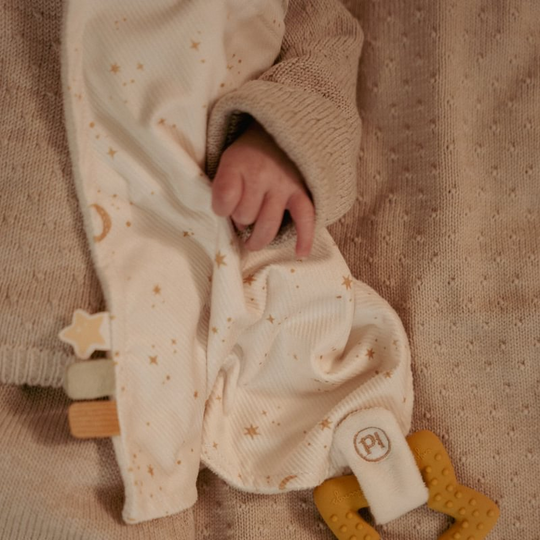
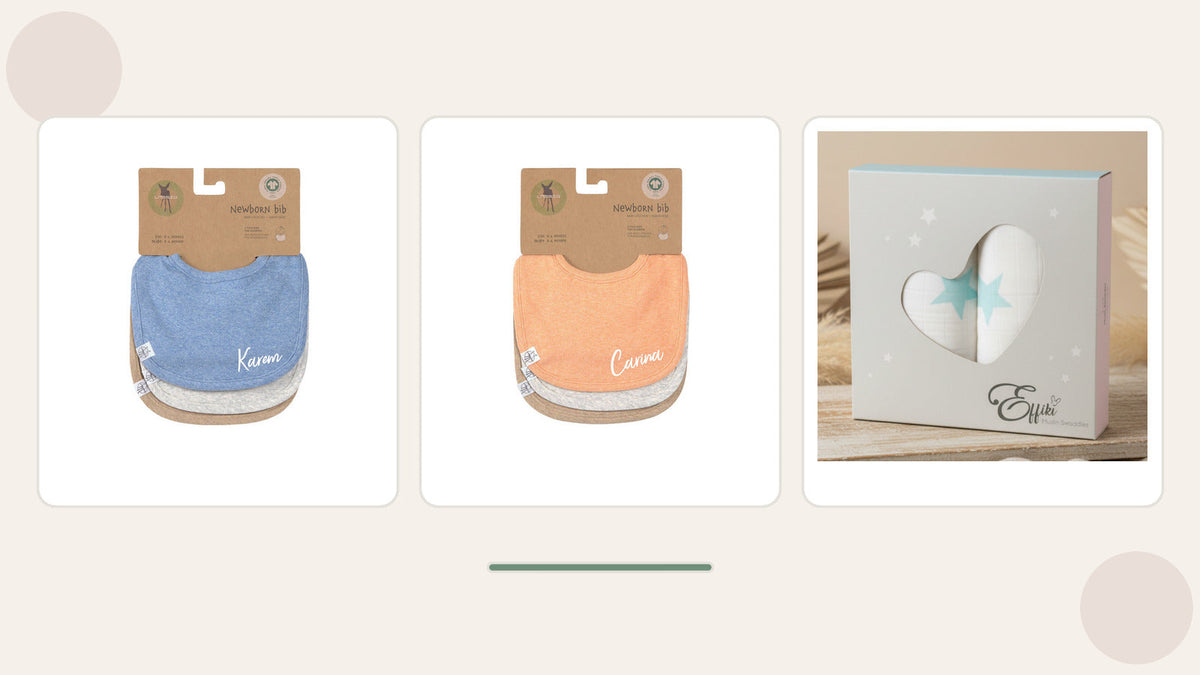
A burp bib protects the neck and chest area during and after a feed. A larger muslin or cotton cloth is practical over the shoulder, on the lap, or as a base. It should never cover the face or lie loose in the sleeping area. The separate Muslin Cloth Size Comparison shows which size is right for your everyday needs.
 Lässig burp bibs blue/grey/beigeThree small everyday cloths; available with or without personalisation.
 Lässig burp bibs apricot/grey/beigePack of three for regular changes; personalisation optional.
 Trixie Bandana bibs Cocoon CaramelTwo bandanas for the neck area; with or without a name.
 Effiki muslin cloth set of 2, 115 × 115 cmLarge format for the shoulder or as a base; personalisation possible.
 Lässig Little Water Whale 80 × 80 cmHandy set of three for the shoulder, lap and on the go.
 Lässig Tiny Smile Beige 85 × 85 cmNeutral set of three for everyday use.
Common mistakes around burping
- Waiting too long: If your baby is relaxed, patting for minutes does not provide any additional benefit.
- Patting too hard: Gentle stroking or rubbing is often enough.
- Putting pressure on the neck: Support the chin and jaw, but never press on the throat.
- Mistaking spitting up for dangerous vomiting: Small amounts are common; warning signs such as green colour, blood or forceful vomiting must be checked by a doctor.
- Unsafe sleeping position: Even after spitting up, a baby should sleep flat on their back, not on their side or on a raised mattress.
Conclusion: The absence of a burp is not automatically a problem
Burping can release trapped air, but it is not a mandatory routine after every feed. A short, calm break and a well-supported upright position are usually enough. If your baby appears content, drinks well and develops normally, you can accept the lack of sound with confidence. In case of pain, drinking problems, noticeable vomiting or lack of weight gain, professional advice is more important than further home remedies.
Frequently asked questions
Does a breastfed baby have to burp?
Not necessarily. Some breastfed babies swallow very little air. If your baby is relaxed after breastfeeding, you do not need to force a burp.
Does a bottle-fed baby always need to be burped?
The same applies to bottle-feeding: some babies need support, others do not. A suitable teat size, a calm feeding position and natural breaks can help reduce unnecessary air swallowing.
What to do if no burp comes?
Try another well-supported position for a few minutes. If your baby remains calm, you can stop. If restlessness continues, a midwife or GP can review the feeding situation with you.
Can my baby sleep immediately after drinking?
If they are calm, they can sleep. Lay them on a firm, flat sleeping surface on their back. Loose cloths do not belong in the baby cot.
Why does my baby spit up when burping?
Some milk may come back up when the air escapes. This is common in babies. Noticeable colour, blood, forceful vomiting, pain or drinking problems should be assessed by a doctor.
Does a burp bib help with reflux?
No. It protects clothing and the skin from moisture, but does not treat any underlying cause. If symptoms are distressing or noticeable, medical advice is necessary.
