
Trixie Mr. Bear, 350 ml
According to product data, the compact stainless steel bottle measures approximately 15.5 × 6.5 × 6.5 cm. It is available with engraving or without personalization and is recommended from age 3.
View 350 ml bottle
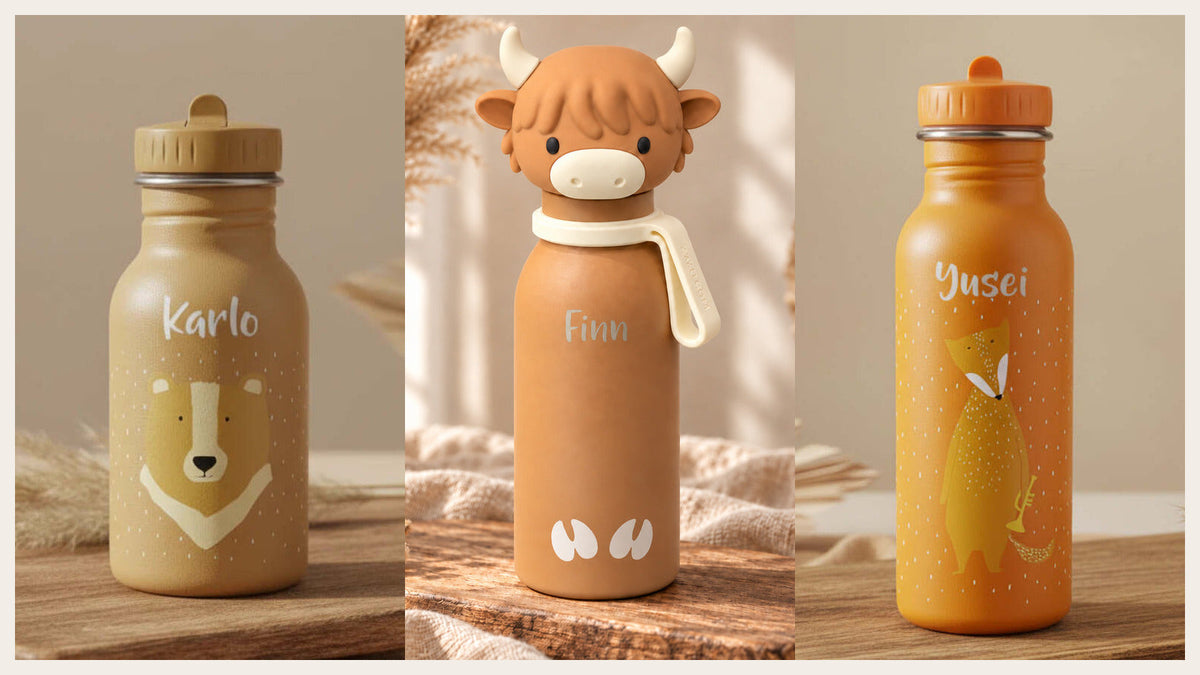
The short answer: Your child should be able to open, securely close, and easily carry their kindergarten water bottle themselves. 350 ml is particularly compact, 400 ml offers a balanced middle ground, and 500 ml provides more of a reserve for longer days. The deciding factor isn't just age, but how long the child is out and about, whether they can refill it, and how heavy the filled bottle becomes in their backpack.
The best kindergarten water bottle is not automatically the largest or most expensive one. It should fit the child’s hand size, be operable without help, remain leak-proof when closed, and be easy to clean thoroughly at home. A familiar motif or the child's own name also helps them recognize their bottle in the cloakroom.
A simple purchasing rule is: choose only as much volume as is truly needed in everyday life. Water weighs approximately one gram per milliliter. With 350 ml, the contents alone weigh about 350 grams, 400 ml about 400 grams, and 500 ml about 500 grams. The empty weight of the bottle is added to that. An insulated stainless steel bottle, in particular, can be noticeably heavier when empty than a lightweight plastic bottle.
Makes sense if a small bottle is easier for the child to carry independently and can be refilled regularly. Check if this amount fits the actual daycare routine.
More reserve than 350 ml without reaching the weight of a 500 ml bottle. Practical for families weighing compactness against range.
Suitable for longer care days, excursions, or children who need to take more with them. Test beforehand whether the bottle, weight, and cap are easy to handle.
These sizes are not rigid age recommendations. A child might get along better with a smaller bottle than a larger model, even if both would be suitable according to the manufacturer. Also, ask the daycare if drinks are provided, if refilling is allowed, and what types of bottles are preferred there in everyday life.
A screw-top, flip-top, or pop-up cap can each work well. The acid test is the practical trial: Can your child open the bottle, drink from it, and close it completely again? Test this with a full bottle, not just an empty one in the store.
Consumer centers recommend choosing a bottle shape that is as accessible as possible, without hard-to-reach grooves or edges. A wide opening makes cleaning and drying easier. Regardless, always pay attention to the specific care instructions: some bottles are dishwasher safe, others must be cleaned exclusively by hand.
Measure the diameter and height of the bottle pocket. A bottle might have the right volume but still be too wide, too tall, or too loose for the existing daycare backpack. Our separate guide to choosing a daycare backpack explains fit, pockets, and packing volume in detail.
Stainless steel is robust and is frequently used for reusable water bottles. Plastic can be lighter. Insulated stainless steel bottles keep temperatures longer but usually weigh more due to their construction. Safety requirements for all materials in contact with food apply within the European Union; however, product labeling and manufacturer instructions remain decisive.
Even a bottle described as leak-proof should be tested briefly after cleaning. Check that the seal and cap are seated correctly and check the product regularly for damage. Carbonated beverages, very hot drinks, or the freezer are only suitable if expressly permitted by the manufacturer.
A name makes the bottle more than just a personal gift for the start of daycare. It also helps with identification when several children have similar models. Check the spelling carefully before ordering, as a permanent engraving cannot be easily changed later.
Short morning and refills possible: A handy 350 ml bottle may be enough.
Normal daycare day: 400 ml is a balanced starting point, provided the child handles the weight and cap well.
Long day or excursion: 500 ml offers more reserve but should be test-carried when filled.
Warm or cold drinks for longer: An insulated bottle can be useful. The temperature and content must always match the manufacturer's specifications.
The following models cover 350, 400, and 500 ml. All products were active, publicly accessible, and in stock in at least one variant at the time of checking. We intentionally omit prices so that the guide remains current during sales and price changes.
Compare all children's water bottles
Discover ZAZU insulated bottles with names
If you need to organize a lunchbox, spare clothes, and other items in addition to the bottle, our kindergarten starter checklist will help. It complements this purchasing advice without repeating the bottle selection.
For many families, the right kindergarten water bottle is between 350 and 500 ml. 350 ml prioritizes handiness, 400 ml forms a balanced middle ground, and 500 ml offers an additional reserve. The final decision should depend on the length of care, refill options, total weight, closure type, and cleaning requirements. Let your child try operating it and compare the external dimensions with their backpack pocket. This way, a beautiful motif becomes a truly practical everyday companion.
This can work for a short morning or if there is a refill option. The decisive factors are the daycare's schedule, the child, and the ability to refill the bottle in between.
500 ml offers more reserve for longer days and excursions. Before buying, check if the child can carry the filled bottle well and operate it safely.
Yes, if 350 ml seems too tight and 500 ml unnecessarily heavy. However, it must still fit the bottle pocket, the child's ability to operate it, and the daycare routine.
Both materials can be suitable. Stainless steel is robust; plastic can be lighter. More important than a general assessment are suitability for food contact, manufacturer information, weight, and cleaning options.
For transport next to clothes and lunchboxes, a tightly closing model is very sensible. Check the seal and cap regularly and test the bottle after assembly.
Personalization makes identification easier at daycare and turns the bottle into a personal gift. Double-check the name very carefully before ordering.
That depends on the specific product. Insulation, motif, and engraving are not reliable indicators. The manufacturer's care instructions are the only authoritative source.
Product data, variants, and availability were checked on September 29, 2026, in the Schmatzepuffer shop. The information on the respective product remains authoritative.


