

Vintage Stacking Rings by Little Dutch
Lightweight ABS model with five rings and a wobbly base; listed from 6 months according to the product information.
View stacking rings
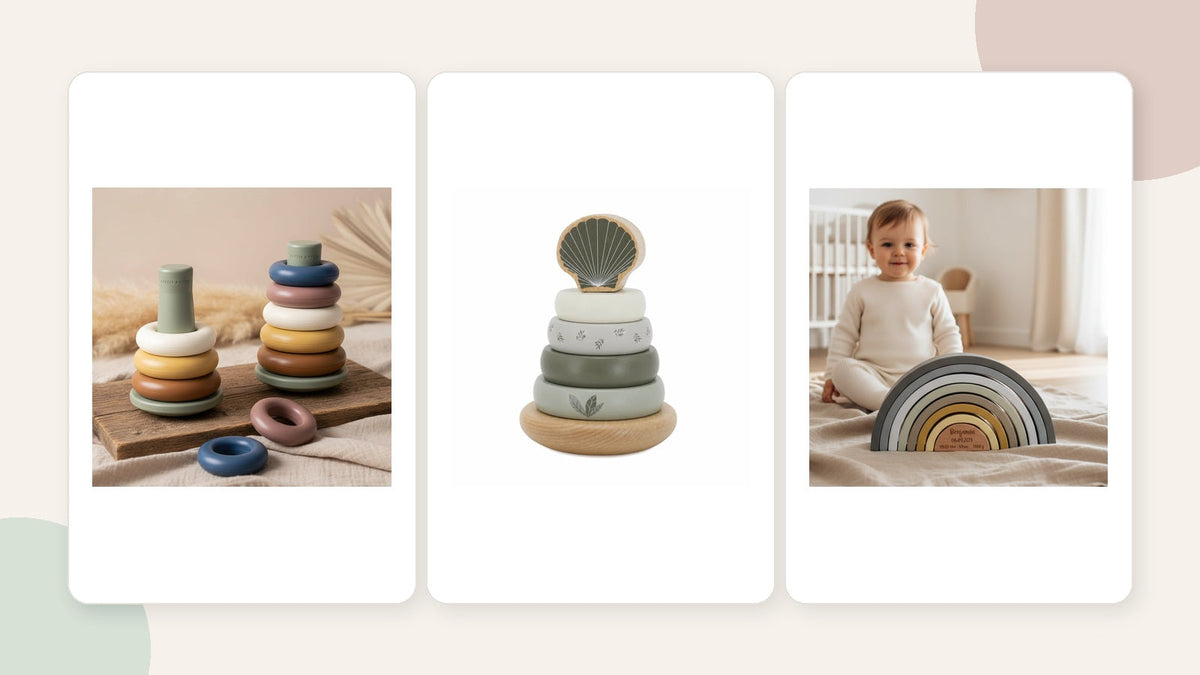
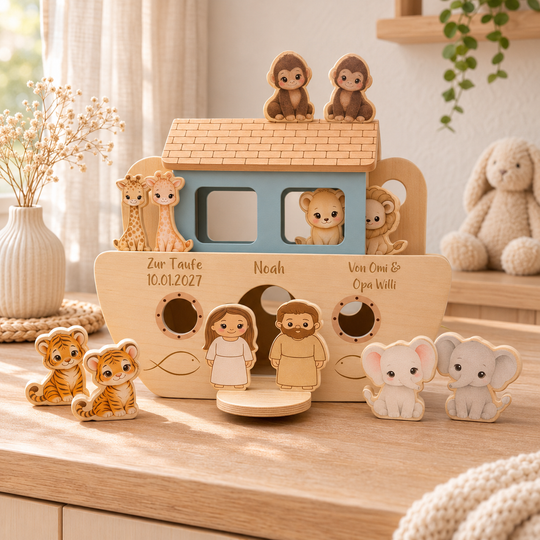
Direct answer: Which stacking tower is right for a baby depends primarily on the specific model's age recommendation and the desired play principle. Classic stacking rings are a clear introduction to grasping, sorting, and stacking. A movable balance base makes the same task more challenging. A stacking rainbow also offers open building ideas such as arches, tunnels, or small bridges. For a younger baby, only a model expressly approved for this age is an option; many wooden models in this selection are intended for children from 10 or 12 months.
At first glance, a stacking tower seems straightforward. However, clear differences emerge when buying: a fixed or wobbly base, rings or arches, wood or plastic, plain or personalized. These details determine whether the toy suits the child's developmental stage, family life, and the occasion. This guide helps you choose the right design without judging every model by the same standard.
| Design | Best suited when… | What to look for? |
|---|---|---|
| Classic rings | a clear stacking task is desired | Age, ring size, stability |
| Balance tower | classic stacking can be a bit more challenging | movable base and frustration tolerance |
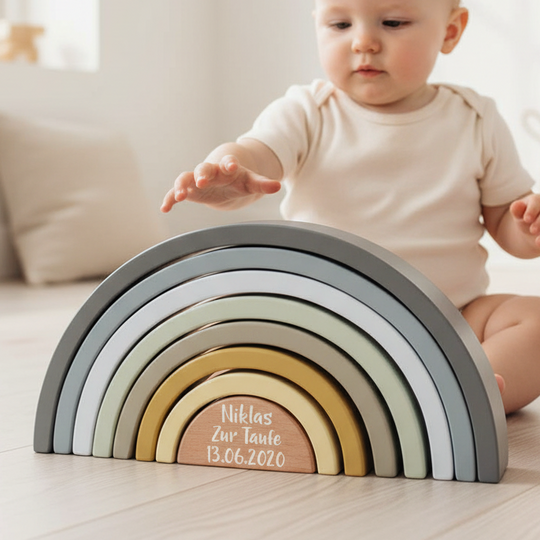
| Stacking rainbow | free building is as important as sorting | Number, size, and handling of the arches |
| Personalized version | a toy is also meant to be a keepsake | Check spelling and intended age separately |
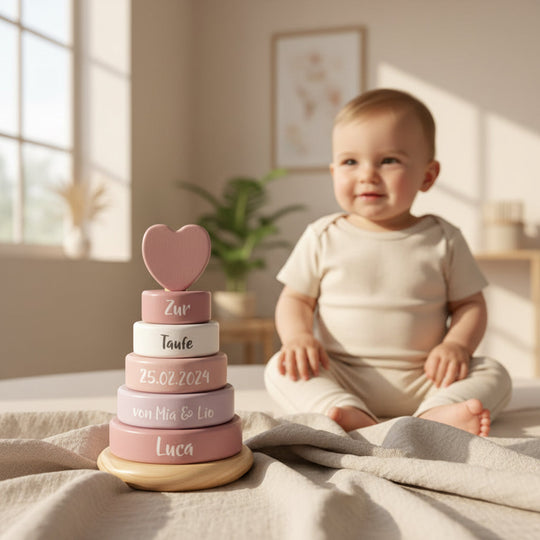
Rings provide a clear task: grasp, remove, stack, and sort by size. This is practical if you are deliberately looking for a focused stacking toy. However, the product type alone is not the deciding factor, but rather the manufacturer's age recommendation. In our selection, the plastic model from Little Dutch is listed from 6 months; most of the selected wooden models are intended from 10 or 12 months.
A balance tower adds a movable or rocking base to the familiar stacking task. The child must coordinate the position of the pieces with the movement of the base. This design is a good choice if a standard ring stacker is quickly mastered or if you are deliberately looking for a model for the time from the first birthday. For children who are just getting into stacking, a fixed base may be a calmer introduction.
A rainbow consists of nested arches. Initially, they are sorted and stacked; later, they can be used as tunnels, bridges, or boundaries in small play scenes. This makes the task less straightforward than with a ring stacker. This can enable more play ideas, but also requires that the child can safely handle larger arches.
The age indication is not a blanket statement about all stacking towers. Size, weight, construction, and individual parts differ. Therefore, always check the information on the product page and later on the packaging or product. A birth gift can initially be a keepsake or nursery decoration; as a toy, it should only be used according to the stated age recommendation.
Ask yourself what the child is actually supposed to do. If it is about a clearly guided stacking motion, a ring stacker is suitable. If the base is meant to be part of the play, a balance tower makes sense. If a versatile building object is sought, a rainbow has advantages. Color and style may be appealing, but they should not replace the right function.
Wood feels solid, usually has more weight, and suits a gift that appears long-lasting. Plastic is often lighter and easy to wipe clean. Both can be the right choice. More important than a blanket judgment of the material are clean workmanship, flawless surfaces, complete product information, and the intended use.
A compact ring stacker is easier to take with you and requires little floor space. A wide rainbow needs more space, but offers larger building pieces in return. Weight is also part of everyday practicality: a light model is easier to carry, while a wooden model often stands more steadily when stacked. Therefore, do not just look at the product photo, but also at the stated dimensions.
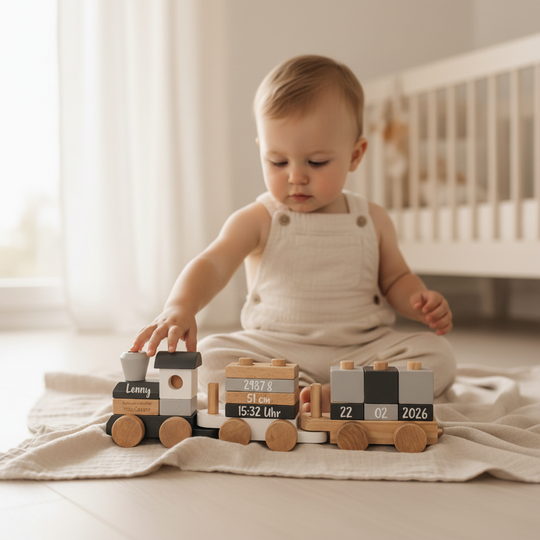
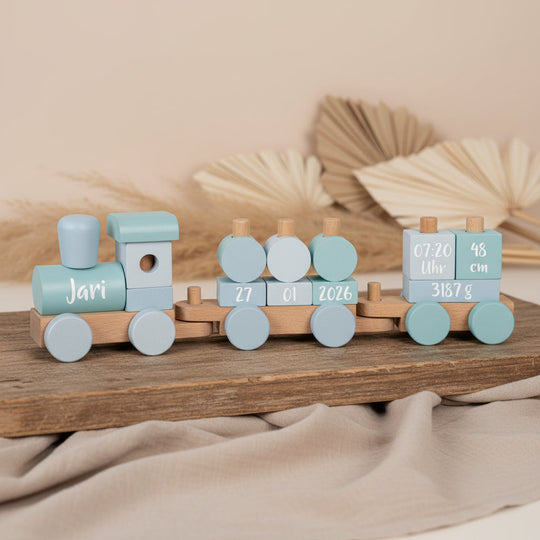
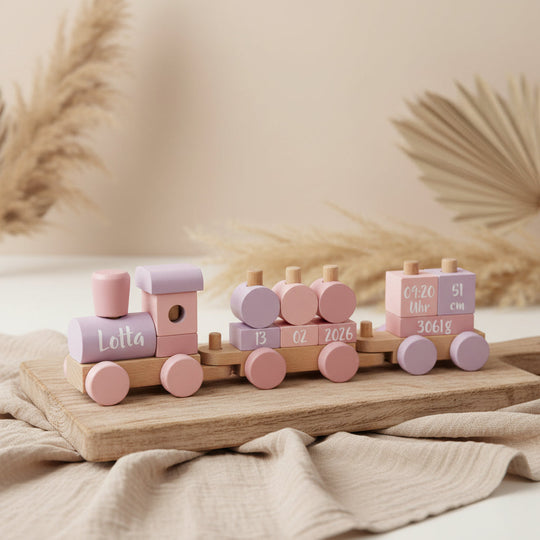
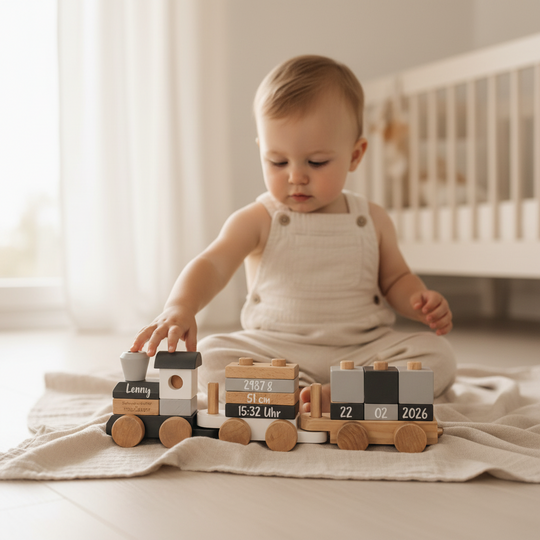
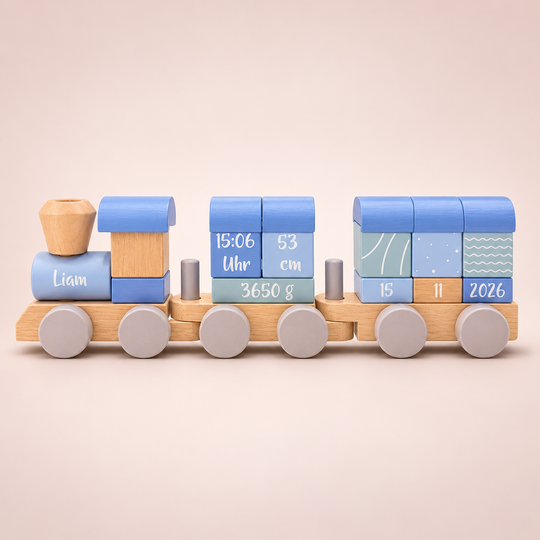
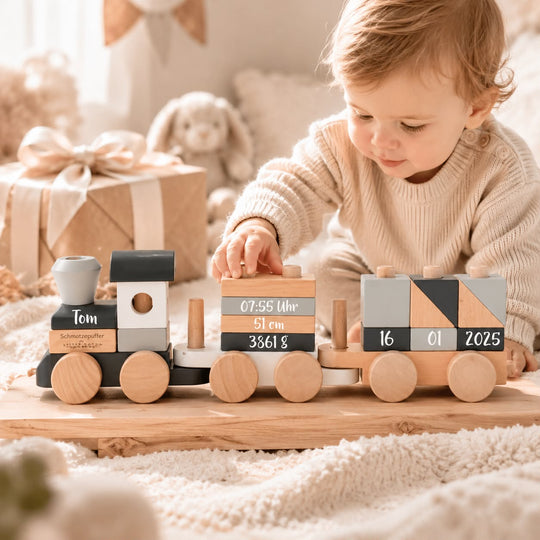
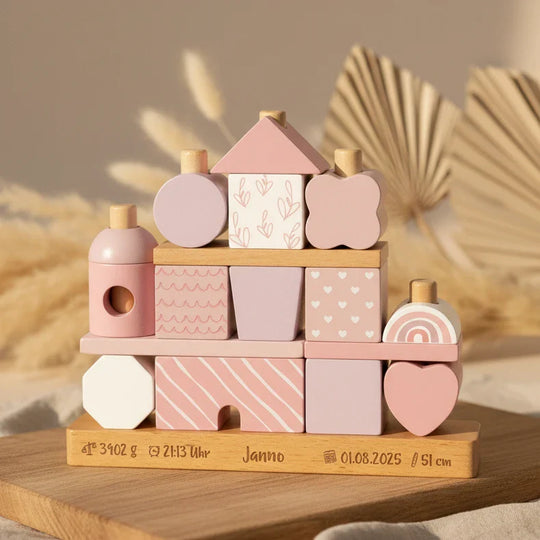
For a birth gift, a name and birth details can turn a toy into a personal keepsake. If you are buying the model primarily for play, this addition is not necessarily required. With personalized versions, you should carefully check the name, date, time, weight, and height before ordering. Personalization does not change the age recommendation of the base product.
Follow the manufacturer's care instructions. Regularly check stacking toys for loose parts, damaged surfaces, cracks, or sharp edges. The consumer protection agency points out that for toys for children under three years, no small parts that could be swallowed must be detachable, and wooden toys should be free of splinters as well as sharp edges. The CE marking is mandatory, but is based on the manufacturer's declaration of conformity; a GS mark stands for an additional independent test.
Decide quickly: Choose rings for a clear stacking task, balance for an additional motor challenge, and the rainbow for more open-ended building. Age recommendation and workmanship take precedence over color, trends, or personalization.
The following products were active, publicly accessible, and available in at least one version during our review. They deliberately show different designs, age indications, and personalization options.
Compare all stacking towers and rainbows
If you are initially looking generally for a toy for a developmental phase, our guide to motor skill toys by age will help. More background on material, care, and selection can be found in the wooden toy guide. This article, however, focuses exclusively on the purchasing decision between a ring stacker, balance tower, and stacking rainbow.
The best stacking tower is not the most eye-catching model, but the one whose age recommendation, handling, and play principle suit the child. Classic rings offer a clear task, balance towers increase the challenge, and rainbows open up play for new building ideas. Wood or plastic, plain or personalized are sensible secondary decisions. Those who follow this order will more easily find a gift that not only looks good but also really suits everyday life.
This depends on the model. In the selection reviewed here, the manufacturer's indication ranges from 6 months for the plastic ring stacker to 10 or 12 months for the wooden models. The indication of the specific product is always decisive.
Not necessarily. Wood is firmer and usually heavier, while plastic is often lighter and easy to wipe clean. Age suitability, workmanship, design, and intended use are the deciding factors.
With the balance tower, the base moves or rocks more. This adds an additional challenge to the stacking and sorting task. A classic tower is usually a calmer introduction.
When the pieces are also meant to be used for free building later. The arches can not only be nested, but also used, for example, as tunnels or bridges.
Yes, as a gift for a later developmental phase. Until the stated age of use is reached, it should be kept safely and not offered as a toy prematurely.
It is particularly worth it if the product is also meant to be a keepsake. It is not necessary for the play value. Check all entered data carefully before ordering.
Check the product, surface, and all parts for damage, follow the age and safety instructions as well as the care instructions. Damaged toys should not be used further.
Professional basics: Consumer protection agency: Safe toys; European Commission: CE marking; Federal Office of Consumer Protection and Food Safety: Product safety. Product review as of: October 8, 2026.


